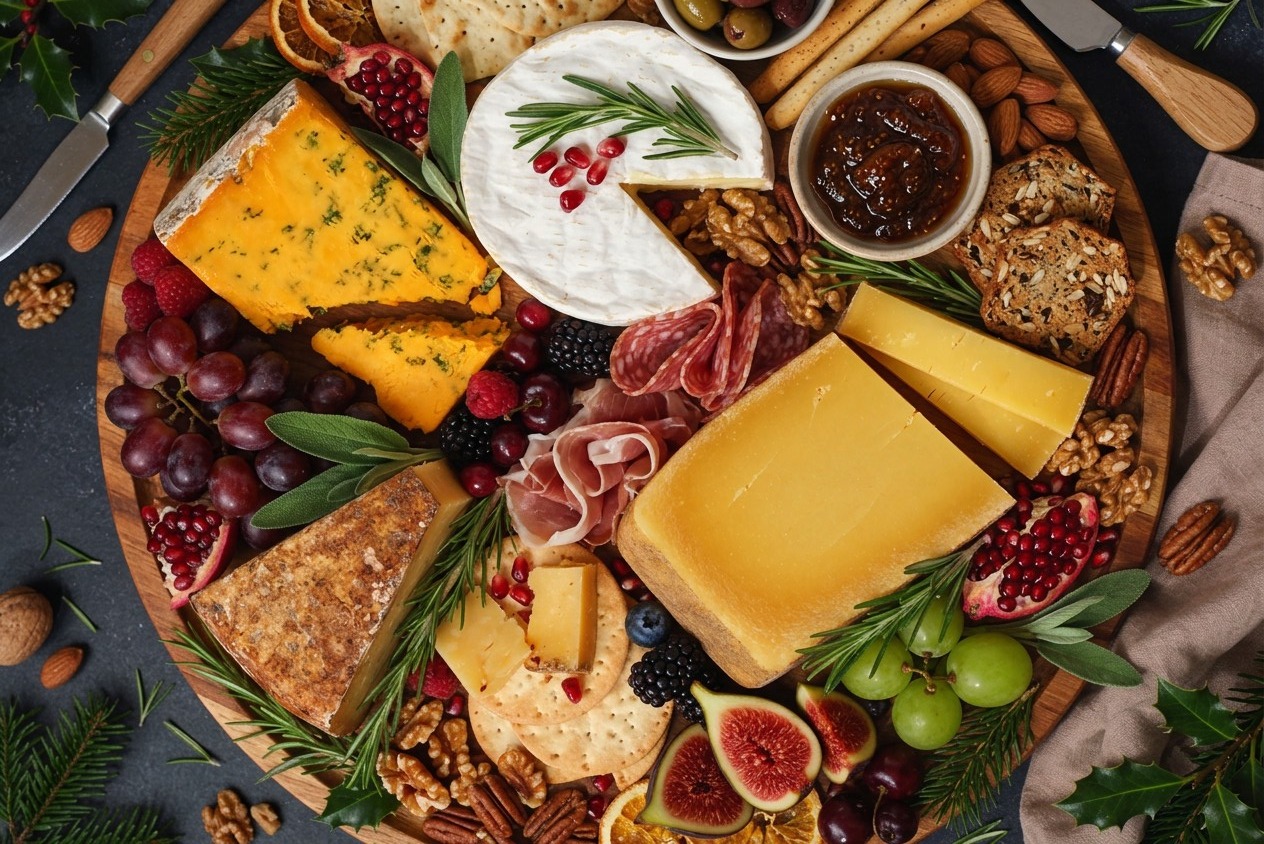
Hands up if you spend hours lurking outside your local cheesemonger each December, queuing patiently to collect (or select) what will land on your festive cheeseboard.
Along with the turkey, the roast potatoes, the pudding and the bubbles, cheese is a central part of most people’s celebrations, The perfect ‘picky tea’ late into the evening on the 25th. An easy addition to the Boxing Day table, nestling neatly alongside slices of gammon, the last pickings of the turkey, bubble and squeak and the endless jars of pickles and chutneys you’ve pulled from the cupboards.
If cheese is your ‘thing’, let us guide you towards the most cheese-ilicious Christmas ever with our expert advice.
Where to buy cheese for Christmas
We absolutely encourage you to make friends with your local cheesemonger or deli. They'll have carefully chosen everything in their counter to be at peak condition for Christmas, and are fountains of knowledge. Also, it's such a lovely experience!
Swing by now to put your orders in so you don't have to queue in the days leading up to Christmas. Mind you, there's often mulled wine and mince pies in those queues.
Of course, if you don't have one nearby, there are some very good cheeses available in supermarkets, particularly M&S or Waitrose (the No1 range). Most retailers stock Great British Food Award-winning Red Fox and Silver Fox from Belton Farm – both sharp, savoury and satisfying. Ditto for St Helen's Farm's award-winning Woldsway Mold Goats' Cheese, which Great British Food Award judge Morgan McGlynn Carr said was "really lovely" and "moreish". She added it's “mild and uncomplicated, but incredibly enjoyable. I kept wanting to go back for another piece.”
How to build the perfect Christmas cheeseboard
There are always so many questions when December comes around. How much cheese do you need per person? Which types of cheeses should you serve on a Christmas cheeseboard? How many cheeses is enough for a festive cheese platter?
As a rule, allow around 30g of each cheese per person, sticking to three to five types. Christmas might be a time of abundance and decadence, but will you really have room in the fridge for 10 different varieties?
We recommend keeping it classic, and British, this year. The ‘holy trinity’ which absolutely should make an appearance are a good Cheddar, a Stilton (or other blue cheese) and a Brie style. To these, add something quirky such as a truffle-infused or washed rind cheese, and a soft goat or sheep’s milk cheese.
Intuition might tell you to decorate your board with snippets of holly and other seasonal greenery, but it’s important (especially when there’s potentially copious amounts of alcohol involved) that everything on the board is edible. Brined vine leaves are an attractive alternative to foraged foliage, and fill gaps with dried cranberries, frozen grapes, little pots of pickles and relishes, baby balsamic onions and halved pomegranates and oranges.
 |
|
The best Christmas cheese pairings
What to pair with Cheddar
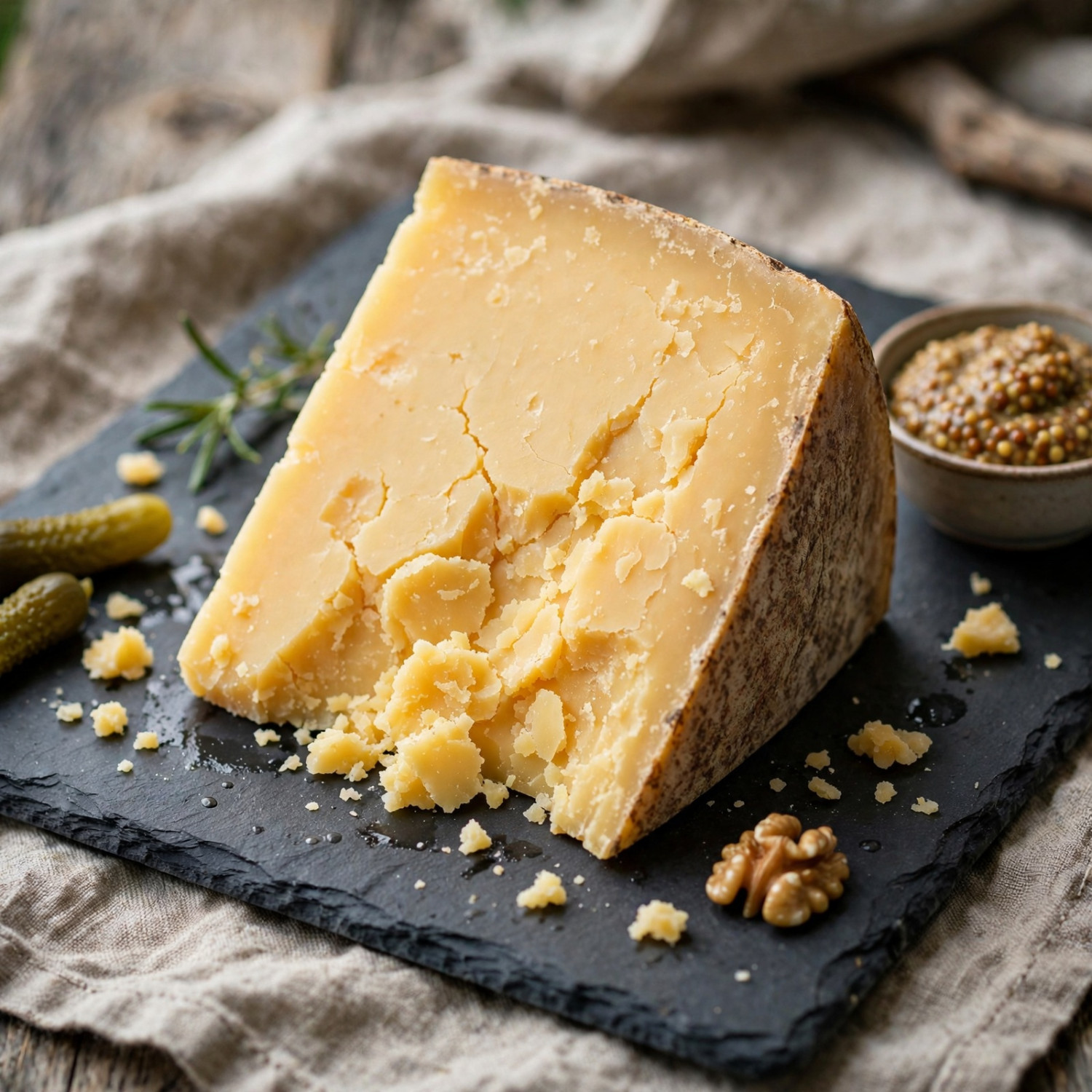
What’s Christmas without a huge wedge of Cheddar waiting in the fridge to satisfy your cravings? Because it’s a special occasion, we think you should treat yourself and invest in the really good vintage or clothbound variety. You’ll be surprised at the difference in taste if you’ve never tried them before.
Pairings: A bold Cheddar should be allowed to ‘have its moment’ so don’t go too whacky. In winter we like to match it with tiny balsamic onions, sweet onion relish, and even baked apples. William Sitwell is a fan of Great British Food Award-winning Cheese Board Chutney from Cottage Delight, The Tealady's Red Onion & Fennel Marmalade, and The Real Jam & Chutney's Hot Smoked Tomato Relish which he says "turns a cheap cracker and some Cheddar into a dream".
To drink: Cider will always be a winner with Cheddar – they were made for each other. Farmhouse, vintage or West Country cider work especially well. Sandford Orchards took Great British Food Awards for its Devon Red and Red Zero (alcohol-free cider). They're both made with traditional cider apples sourced from within 30 miles of the press, and cold fermented. Dunkerton's Great British Food Award-winning Organic Session Cider is also worth seeking out.
What to pair with Alpine-style cheeses
From Gruyére to Comté and Taleggio, Alpine cheeses are all the rage at the moment. And our British expressions on this style are absolutely exemplary, including Great British Food Award-winning Lincolnshire Poacher Cheese's Poacher 50, and Botton Creamery's Summerfields.
These are all so versatile, bringing tonnes of flavour to a cheeseboard, but also melting beautifully.
Pairings: Alpine cheeses err towards nutty, sweet flavour profiles. Ideal matches include candied orange peel, floral honeys (check out Horton's Honey's Apple Orchard variety), toasted hazelnuts or almonds, and dried apricots. We've even served these with sesame snaps which sounds weird, but works!
Drink: A light red such as a Gamay or Pinot Noir, or an Alsace-style wine like Gewurztraminer are brilliant partners for these cheeses.
What to pair with truffle cheeses
Truffle has found its way into so many cheeses – and we’re here for them all! You’ll discover truffled Cheddars, soft cheeses, infused truckles and more in this space. For us, having one of these in your Christmas cheese wheelhouse is a must. Naturally we recommend Great British Food Award Grand Champion Fen Farm Dairy's Truffled Baron Bigod, generously and deeply filled in the centre with the farm's own luxurious mascarpone, churned with black truffle. It's absolutely showstopping!
Pairings: Bring out the bold bosky nature of truffle with pickled mushrooms, pickled garlic, umami black garlic relishes, and herb-infused honey.
Drink: It’s got to be Champagne, darling! Or English bubbles, of course.
What to pair with Ubriaco cheeses
If you’ve never heard of them before, seek out your closest stockist right now. Infused with and soaked in booze (from red wine to prosecco), these take on a fruity, absolutely gorgeous flavour and they’re always a cheeseboard talking point.
Pairings: You can get very indulgent here. Think boozy fruits in syrup, sultanas warmed in Port, fruit crackers, cherry jam, and even good quality dark chocolate.
Drink: Match the cheese with whatever it’s soaked in, be that fizz or a sweet dessert wine.
What to pair with washed rind cheeses
Washed rind cheeses can be overlooked the rest of the year, but we sure do love to grab one for our Christmas grazing boards. Don’t be scared of them – that's what we say. Yes, some pack a punch when you unwrap them, being funky and pungent, but there are others, like British Ogleshield or Highmoor, which are more subtle, yeasty and sweet. There’s a washed rind for everyone.
Pairings: For the ‘stinkier’ cheeses we recommend pickled onions, sharp fruit cheeses, hot honey and chilli-based relishes such a Great British Food Award-winning Chilli Crunch from The Woolf's Kitchen, as championed by judge Nisha Katona MBE. If you go for a milder washed rind, treat them more subtly with the pure simplicity of cream crackers or butter wafers.
Drink: Sparkling wine cuts through the richness of these cheeses, but we also recommend mead, perry and unoaked Chardonnay.
What to pair with goats' cheese
The spectrum of these cheeses is diverse. You’ve got your barely set, super lusciously creamy lactic goats’ cheeses, fluffy, mousse-like cheese logs, mould-ripened cheeses with delicate rinds, and those finished with a striking ash coating. What you pair them with changes depending on the variety.
Pairings: If you’ve got a minerally, slightly chalky goats’ cheese on your hands, what you need is some charcuterie, or fried salted sage or rosemary sprinkled over the top. More yielding soft goats’ cheeses need nothing more than a light drizzle of honey, chunks of still-warm baguette, or sweet fig chutney.
Drink: We like to pair these with Sauvignon Blanc, Chablis or even a sweet Vouvray, which works especially well with young, soft goats’ cheese.
What to pair with hard sheep's milk cheese
Tapas culture has meant we’re buying more Manchego than ever before, but also daring to try other sheep’s milk cheeses like Pecorino. Rosemary Manchego could be an especially good choice for your Christmas table.
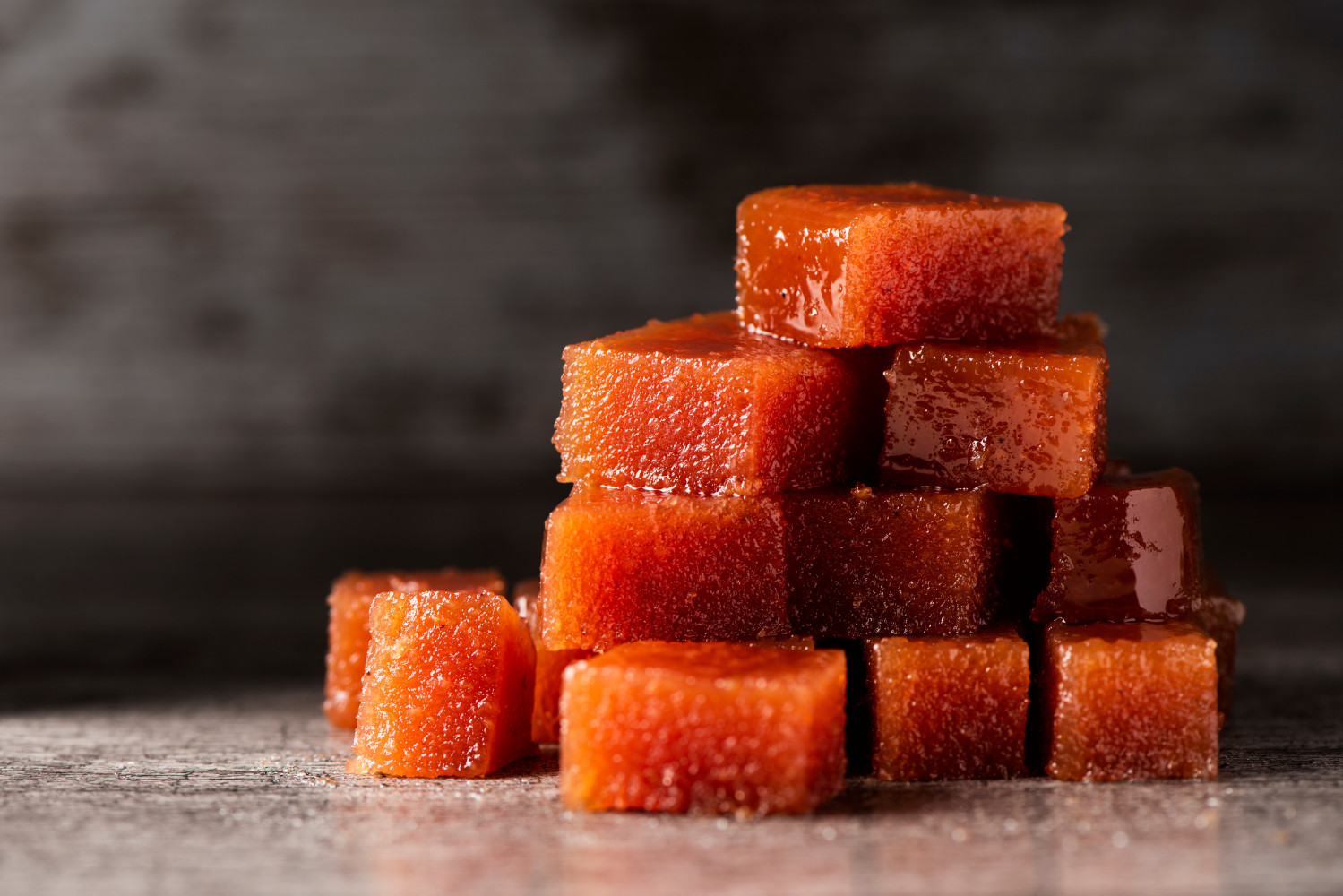
Pairings: In Spain, fruit is the most common partner for sheep’s milk cheese. Reach for candied or glace fruits, Italian mustard fruits and fruit pastes (from quince to blackberry). Winter is prime tropical fruit season, and pineapple is delightful with sheep’s milk cheese. But so too are pieces of dried mango.
Drink: Cider is another great choice here. Or bubbles.
What to pair with soft cheeses
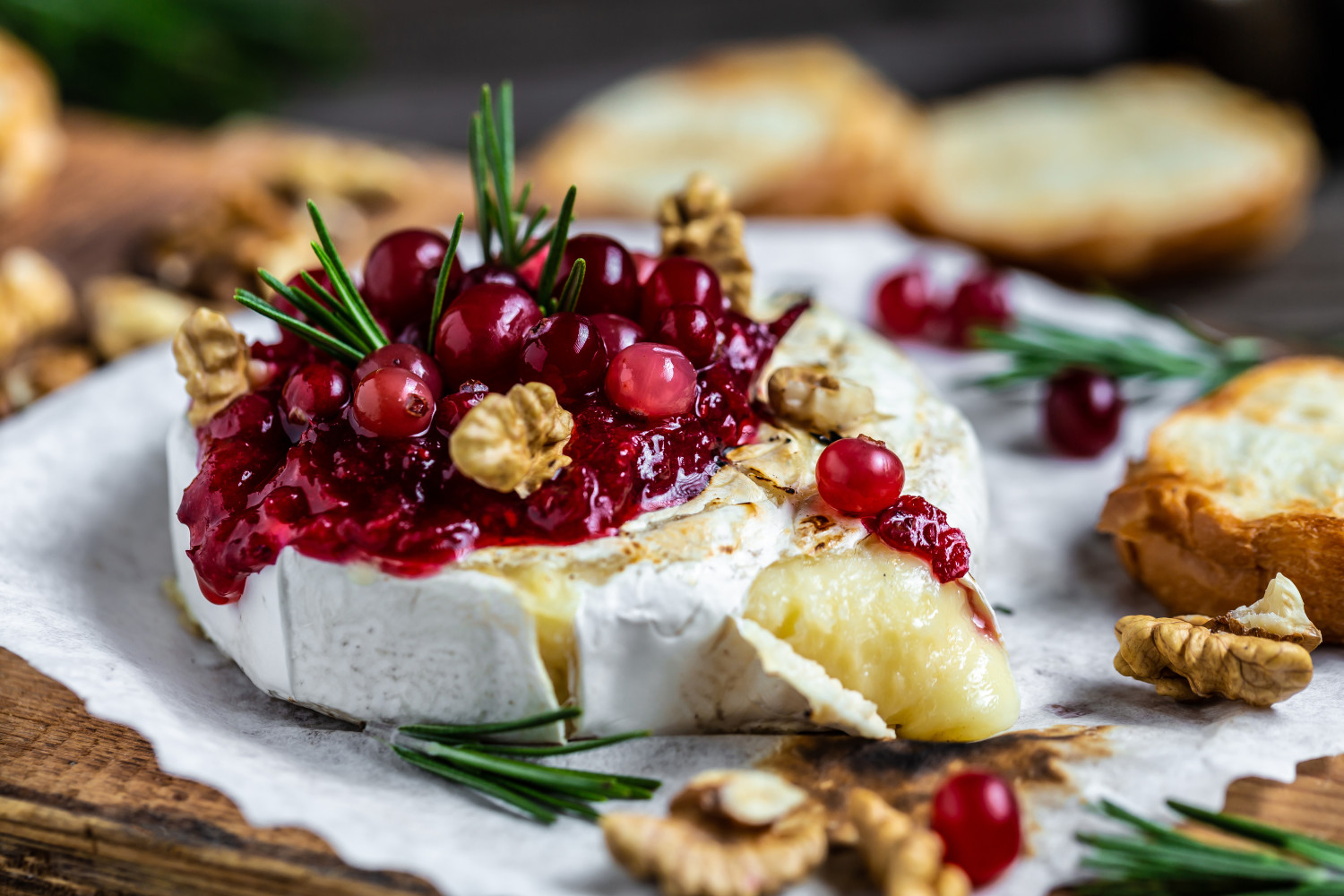
What is Christmas without a wooden parcel of Brie or Camembert-style cheese? It’s become a festive must-have for lots of us, and rightly so. It’s absolutely gorgeous. There are plenty of British-made Bries to sample too – as we've already mentioned Baron Bigod, or for something a little different, Appleby Creamery's Eden Smokie.
Pairings: The classic way of serving an individual soft cheese is to pierce it with a sharp knife and stud it with slivers of garlic and spears of rosemary before baking. In winter, we like to bake it au natural, before topping with roasted pears, candied walnuts and truffled honey. If it’s going on the cheeseboard, bring the cheese to room temperature two to three hours before serving to allow its middle to gently ooze, and serve with roasted figs, fig chutney, toasted nuts or even pieces of broken real honeycomb.
Drink: Bubbles cut through the richness of these cheeses, but they also marry well with perry, mead, Pinot Noir, Riesling and Barbera. A fun pairing for Christmas is chilled sparkling red.
 |
|
Cheddar explained: What do all the labels mean?
So much Cheddar lands in our baskets at Christmas, ready for party time, but do you actually know what the labels mean?
Mild Cheddar: Matured for around two to three months, this is a supple, delicately flavoured, buttery, milky cheese. As the name suggests, it’s very mild, so perhaps for less adventurous guests. Its neutrality and easy melting qualities mean it’s very good for Christmas toasties.
Mature Cheddar: This will be at least six months old but usually 12 months, taking on a much greater depth. Again, it’s ideal for melting, but it’s rather nice too with a drop of cider. For those who like a nostalgic ‘cheddary’ taste.
Extra Mature Cheddar: Aged for 18 to 24 months, extra mature Cheddar brings a wallop of flavour to the party. It’s savoury, edgy, packed with umami, and often has a few (harmless) crystals in each bite. The texture will be more crumbly and flaky, sometimes with pockets of moisture.
Vintage Cheddar: This cheese is usually aged for at least 24 months, becoming even more savoury, rich and complex as it develops. It can be a bit spicy and fruity.
West Country Farmhouse Cheddar PDO: Only Cheddars produced in Dorset, Somerset, Devon or Cornwall, made from cow’s milk, and at least nine months old can carry the PDO. They usually have a rounded, slightly sweet flavour that everyone enjoys.
Clothbound Cheddar: Seek out a traditional clothbound Cheddar if you want to impress. The outside is rubbed with lard or butter to prevent it drying out, and wrapped in cloth to help create a natural rind. Each part of the cheese tastes different, becoming more earthy and truffly towards the rind.
 |
|
Cheese recipe ideas for Christmas
Who can resist the ooze of melty cheese? Not us. Here are three of our favourite ways to serve it in winter.
1. Raclette - hire or buy (tealight set ups are not expensive) a raclette machine, go out and find a big old slab of Raclette (you can even get chilli, herb, garlic, smoked and truffle versions these days) and let it bubble away over the heat. Spoon over baby potatoes, cornichons, bread and charcuterie.
2. Tartiflette – layer a Reblochon style cheese, cream, white wine, crushed garlic, parboiled, sliced floury potatoes and crispy lardons and bake in the oven. Scoop mouthwards with crusty bread.
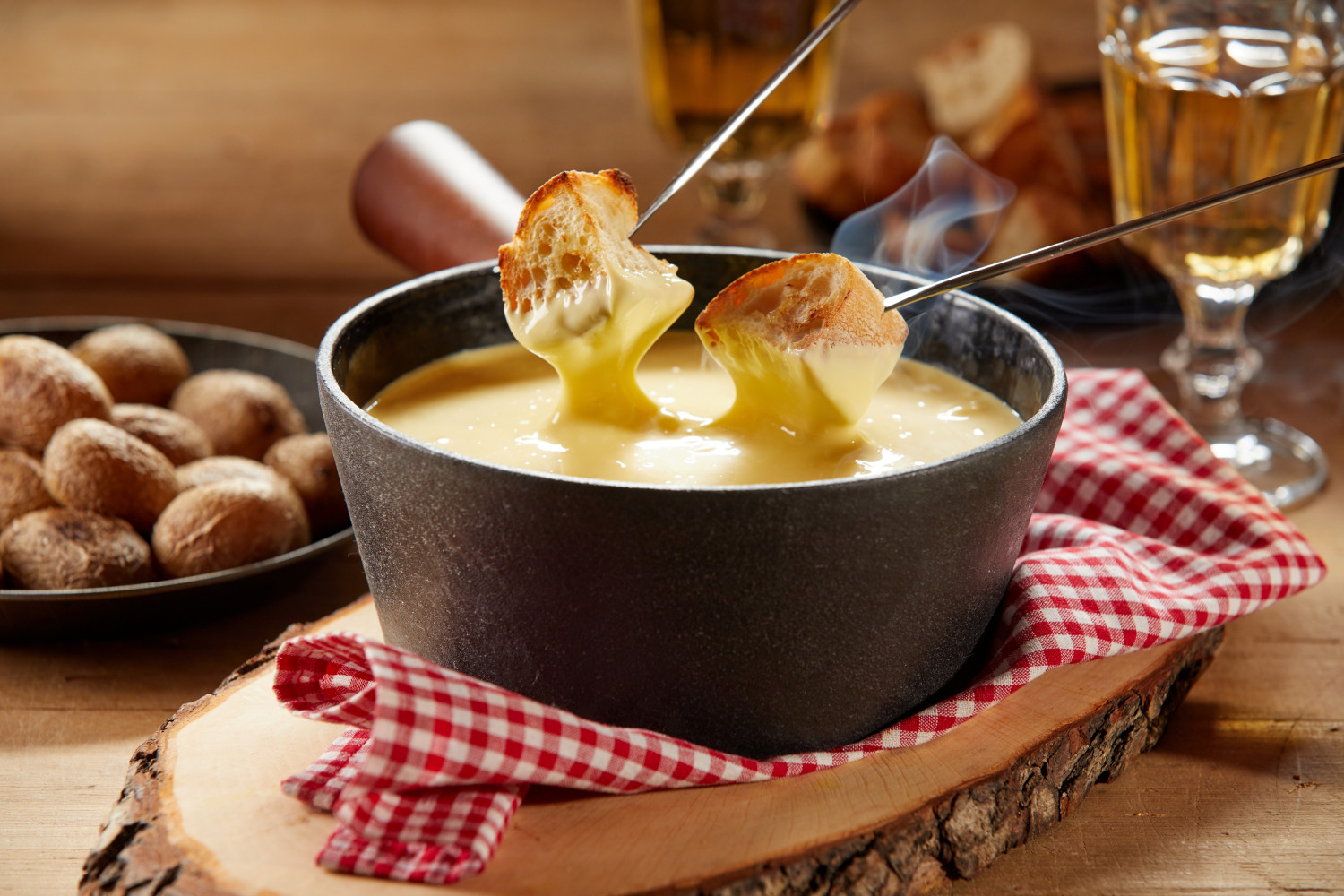
3. Fondue – rub the inside of a fondue pot (or heavy bottomed pan over a low heat on the hob) with a cut clove of garlic. Add 1tbsp cornflour, 1tbsp kirsch, brandy or eau de vie, 200g dry white wine, and 400g Alpine style cheese (Gruyere, Emmental or British equivalents). Warm through, stirring all the time until melted and combined. Serve with lots of crudites, pickles, bread and charcuterie. Don’t forget, if you drop something in the pot, you need to kiss the person to your left!
 |
|
Make your own ‘fruit cheese’
Bring the cheeseboard to life by making a fruit cheese using plums, quince or figs. Weight out 1kg of fruit, wash it carefully, remove stones (plums) and place in a large pan. Just cover with water, bring to the boil, then simmer until very soft. Blitz in a food processor and pass through a sieve. Weigh the puree and add it to a pan with an equal amount of sugar. Bring to the boil, then simmer (stirring all the time) for an hour or so until very very thick. Decant into little glass butter dishes, seal with waxed paper and allow to cool before wrapping. Store in the fridge for up to three months. It’s divine with blue cheese.
How to store leftover cheese
If you've bought too much for your cheeseboard, or just couldn't fit it in after the turkey roast, the mince pies and the panettone, don't fear – your tasty cheesy treats will keep for longer than you think.
Is the mould on cheese safe?
Stored in a fridge (or even a cold garage or shed) most cheese is fine beyond its best before date. White fuzzy mould is expected on softer Brie-style cheeses, and it's common for little blue-green patches to form on harder cheeses. Simply cut this away and you're good to go.
If your cheese takes on a strong ammonia/fishy aroma and tastes bitter or acrid it's probably past the point of no return.
How long will cheeses last in the fridge once opened?
Harder varieties have lost a great deal of moisture in the maturation and pressing processes. This, and the levels of salt that go into producing them, mean they'll quite happily sit in the fridge for months. Keep an eye on them, rewrapping regularly, looking for signs of mould and cutting it away.
Softer cheeses are higher in moisture that's more difficult to control in a home setting. A good guide is aiming to eat very delicate soft, fresh cheeses within two to three days, and blues and firmer soft cheeses (like Bries) within a week.
How to wrap leftover cheese
Whatever you do, don't use clingfilm, which makes cheese sweat, accelerating mould growth. The very best thing to wrap cheese in is professional, breathable waxed cheese paper. If you're nice to your cheesemonger, they might let you have a couple of extra sheets when you buy your Christmas cheese, or you can buy it online. Otherwise, kitchen foil is fine.
If you want to go retro with harder cheeses, spread the cut surfaces with proper butter or oil. This will stop them from drying out. Just cut away the spread sides before eating.
Is it OK to freeze cheese?
It's not ideal to freeze cheese – better to turn it into a sauce, quiche, toastie or pizza – but it's absolutely fine to do so, though the taste and texture of some varieties will change.
We'd avoid freezing very creamy, soft cheeses which can form ice crystals, ruining the creamy mouthfeel you love them form. Only freeze soft cheeses if you plan to use them in cooking or baking later on.
Hard cheeses, wrapped well, fare better in the freezer, but we say keep an eye on them in the fridge instead if you've got space.