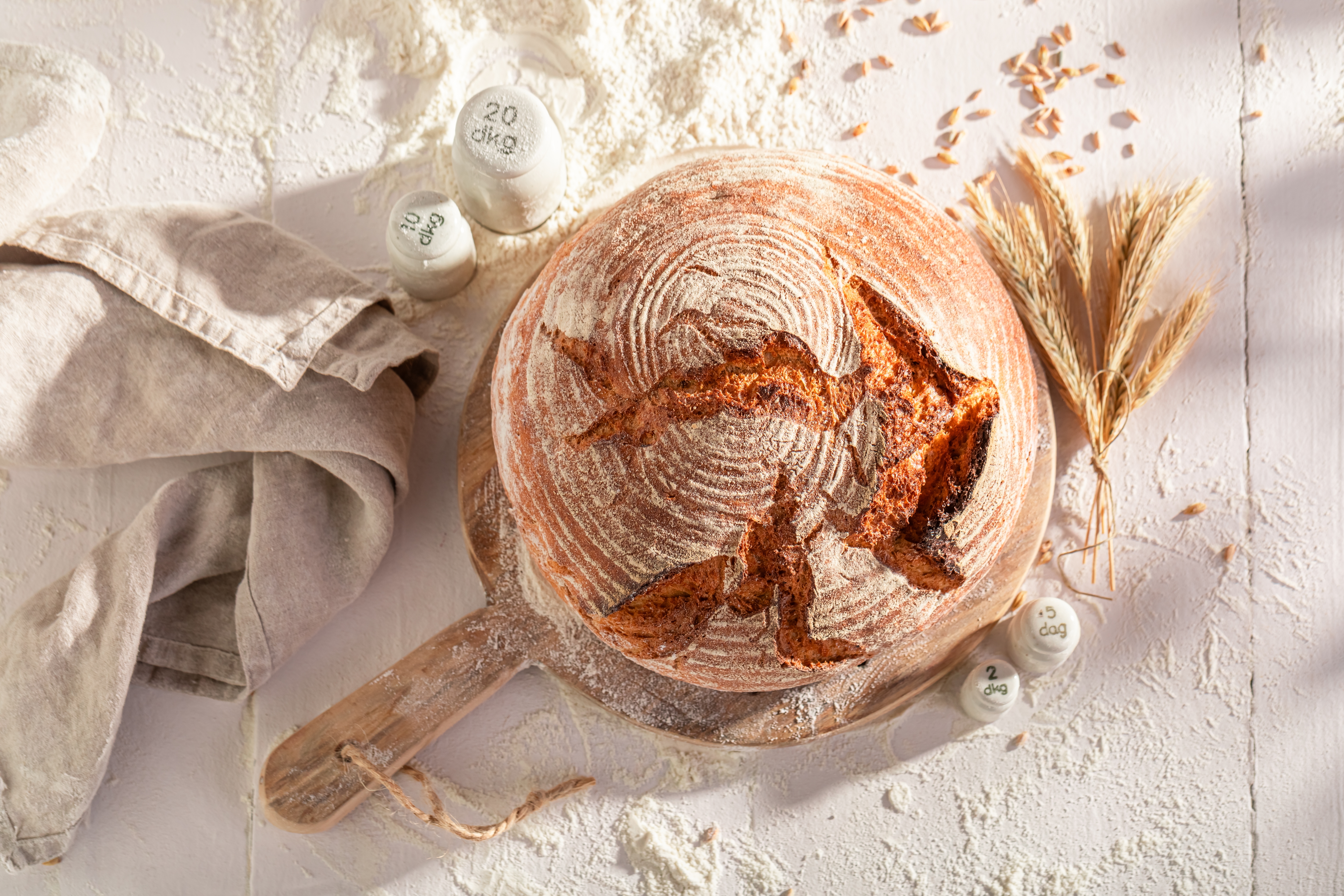
Nothing beats freshly made bread does it? The yeasty aroma that pervades the senses. The crackle of a just-baked crust. That soft, yielding texture – the perfect vehicle for lashings of salted butter.
If you’re flummoxed by the world of bread, let us be your guiding hand. We’re going to teach you how to make the perfect loaf, answer your burning questions, and share some of our favourite recipes.
How to make a loaf of white bread
You’ll need: 500g strong white bread flour, 7g dried yeast, 1tbsp sugar, 1.5 tsp fine sea salt, 2 tbsp oil or soft unsalted butter, 300ml water at blood temperature (it should feel pleasant and warm to dip your hand in, flour for kneading
Add the flour, sugar and yeast to a large bowl and combine. Rub in the oil or butter with your fingertips until it disappears. This will help soften the crumb of your finished loaf.
Make a well in the middle of the dry ingredients and pour in the water. Use a knife to bring it together into a rough dough and allow it to rest for 10 minutes. This allows the flour to start absorbing the liquid and means your hands won’t get so sticky!
Now add the salt. Salt can prohibit the activation of yeast, which is why we add it to the recipe a little later, giving the yeast a chance to develop.
Knead the yeast into the dough.
Lightly flour a surface and grab a dough scraper (if you have one). Knead the dough by pressing one hand on half of it, and pushing the other half away, then folding it back in. If it’s a little sticky, use the dough scraper to fold the dough back. You can add a little oil to your hands to prevent sticking. Persevere. After around 10 minutes of kneading the dough will be soft, springy and alive. Try to add as little flour as possible during the kneading stage – the more moisture your dough has, the better it will rise, and the lighter the result.
Pop the dough into a lightly greased bowl, cover, and leave in a warm place to rise for an hour or two – it should double in size.
Pre-heat the oven to 230-240C and pop a baking tray of water in the very bottom. If you have a clean spray bottle, fill it with water.
Either line a 2lb loaf tin, or a baking sheet. Shape your dough into a round on the baking sheet or roll it into a sausage shape and pop into the loaf tin. Leave somewhere warm for 15 minutes.
Use a sharp knife or blade to cut shallow slits in the top of the loaf – this controls the rise and protects the shape of the bread.
Turn the oven down to 220C and place the bread on the middle shelf, spritzing with water as you shut the door.
Bake for 30 minutes. When cooked, the bread will be risen, golden, and make a hollow sound when you tap the bottom.
Try to restrain yourself. Allow the bread to sit and cool for around an hour or so before cutting so it doesn’t tear. If you’re not bothered about getting neat slices and want to rip straight in, though, go for it!
Once you’ve got the hang of making a basic loaf, why not try one of these?
Courgette, Smoked Cheddar and Jalapeno Bread
No-Knead Flatbreads with Sesame & Honey Butter
Caramelised Onion Rye Sourdough
Bread baking FAQs
What’s the difference between strong bread flour and plain flour?
There’s quite a difference actually. Strong white bread flour typically has a protein level of around 12-14%. This contributes to a light, airy rise. Professional bakers will often use strong Canadian bread flour, which has around 14-15% protein – making it ideal for longer fermented loaves and pizza-making. We highly recommend the ranges from Great British Food Award winners Marriage’s and Wessex Mill.
Can you use plain flour instead of strong flour for making bread?
Plain flour is fine if you’re making naans or flat breads or soda breads where there might be another raising agent, and the goal isn’t a billowing loaf. Other breads really do need strong flour to give them a chance to develop properly.
What’s the difference between wholemeal and whole wheat flours?
They’re pretty much the same thing – though whole wheat is a term most used in America. If you want to make a really nutritious wholemeal loaf, seek out a good quality flour with a high level of wheatgerm (see the brands listed above). Stoneground flours are even better, being much more nutritious, and filled with flavour. You’ll have to add a touch more water to wholemeal flour to help with the rise. Dan Lepard adds a crushed Vitamin C tablet to his to activate the bread further.
Where can you buy fresh yeast?
Ask your friendly local baker who will often give you some for free or next to nothing – some in-store supermarket bakeries have even been known to offer it. It’s also available frozen online.
How do you substitute fresh yeast for dried?
Where a recipe calls for fresh yeast, but you only have dried, cut the amount to a third. Similarly, if a recipe asks for dried yeast, but you only have fresh, triple the quantity.
Do I have to add sugar to bread dough?
Sugar has two purposes in breadmaking. Firstly, it helps to feed yeast, aiding its development in the proving stage, leading to a lighter loaf. Secondly, it adds flavour. You can leave it out, but it might take a little longer for your bread to rise.
Can I leave the salt out of a bread recipe?
You might be making your own bread because you’re trying to cut salt out of your diet. A typical homemade loaf has much less salt on average than what you’ll buy in the supermarket. But if you’d really rather lose it altogether, note the finished bread won’t be so tasty. Also, salt is there to help create that nice crust. A saltless bread won’t be as crispy and crusty on the outside.
What’s the best way to knead bread?
You can use a dough hook in a food mixer for a hands-off experience. But we think the joy of baking is getting stuck in.
Key is not to add too much additional flour. The more flour you add, the denser your bread will be.
Use lightly greased hands and prepare a lightly floured surface. Press and push the dough away, and fold it back on itself. Continue for around 10 minutes.
A less intensive method is to allow the dough to sit for 30 minutes once combined, Giving it a light knead every half hour or so – repeating 4-5 times.
What should well-kneaded dough look and feel like?
Dough is ready for proving when it’s smooth, elastic and bouncy. If you dip a finger in flour then press it into the dough, it should spring back softly.
How long should you prove bread for?
It depends on the type of bread. A standard loaf will take an hour or two. If you’re making a longer ferment like sourdough that could be half a day or a day. Some breads, like those enriched with butter, require a spell in the fridge too. Refer to your recipe.
How can I get a nice crisp crust on my bread?
In addition to using the correct amount of salt, what you’ll need to do is create steam. Lots of people have great success cooking their breads in Dutch oven casserole dishes, which build up steam as the loaves cook.
Otherwise, set your oven to a very high temperature and place a roasting tray half filled with water in the bottom while it warms up. When the oven is hot, add your bread, turn the temperature to the correct heat, and use a clean bottle spray, filled with water, to spritz the bread as you close the oven door.
How do I make a sourdough starter and when do I feed it?
This couldn’t be simpler. Use a wide lidded jar. Add 50g strong white flour and 50ml body temperature water and stir. Add the same ingredients every day for four days. On the fifth day you can use a portion of the starter to make sourdough, ensuring you add another feed (50g flour 50ml water) as you do so.
What does a good sourdough starter look and smell like?
A new sourdough starter will have a few little bubbles (like a pan simmering) that will get bigger as it ages. The smell should be pleasantly yeasty and fruity with a bit of funk.
Why isn’t my starter bubbling?
Sourdough starters like the warmth. Do not keep yours on a cold windowsill! Pop it in a cupboard away from draughts.
Make sure you use strong white bread flour. And you might want to use filtered water, as the chlorine in tap water can impact the growth of a starter.
How do I make my sourdough less sour?
Adding a bit more water to your starter (an extra 20ml each time it’s fed) creates a gentler tasting sourdough.
Will my starter survive if I go away?
Your starter really does need to be fed daily, so arrange a kindly babysitter to look after it if you’re going on holiday. Otherwise, seal it and pop it in the fridge where it will go to sleep. Once you’re back, return it to its home and start feeding it again. It will revive quicker than you think.
My starter smells bad/fishy
Some unhealthy bacteria might have made its way into your bowl/tub/jar. If you notice any smells that, quite frankly, make you want to gag, through the starter away and begin again.
Why isn’t my bread rising in the oven?
You might have used the wrong flour. Or you proved it at too cool a temperature or for too long, making it collapse. It’s also worth checking the temperature of your oven (invest in a thermometer if you’re really serious). If it’s not calibrated properly and your oven is a few degrees cooler than you think, this could be having an impact.
How long will homemade bread last?
You might not be able to resist scoffing it all in a day – nothing beats fresh bread! But typically, as it doesn’t contain any preservatives, you’re looking at two days for a standard loaf or three to four for sourdough.
All bread can be cut into slices and frozen, ready to toast. Frozen bread, experts say, is better for you than fresh, as it contains resistant starch, which is easier to digest and better for the gut! Pop any stale bread into an open wicker basket covered in a cloth. Let it dry out before using to make breadcrumbs.